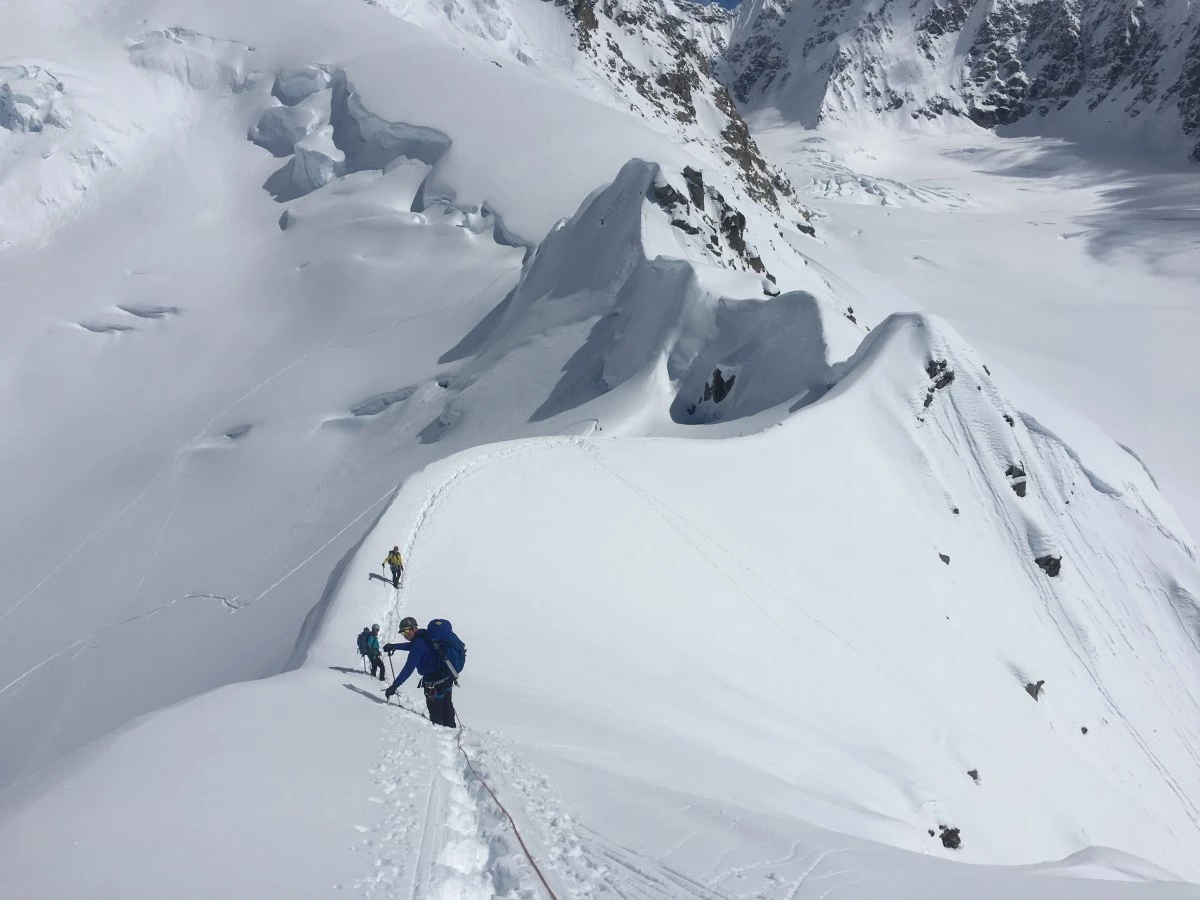
An ice axe may be the universal symbol of alpine climbing: a flashy tool that can last a lifetime, carry history, tell stories, and be passed down through the generations. But the unsung hero of alpine climbing, we think, is the mountaineering backpack. This is an item of compromises, something so detailed and personal that we can spend hours debating and deliberating the various pros and cons, design flaws, features, and so on and then realize we’ve spent the whole evening yammering about a plastic bag that may not be with us for more than a few months.

To spare you the loss of evenings such as these, or the heartbreak of failed gear or ruined climbs, we’ve spent years putting the industry’s best mountaineering packs through their paces in the best (and worst) conditions alpine climbing has to offer. Our testers have a solid grasp on the strengths and weaknesses of these packs and some good ideas about how to help you find the best one for your needs.
So, where do you even start to figure out what kind of pack you need for your adventures? Your mountaineering backpack needs will depend first on your style of alpine climbing and the character of the mountain range in which you travel. Those who primarily climb rock in the High Sierra of California will require a high degree of fabric durability and may care less about the quality of an ice tool attachment. Those who are primarily climbing in glaciated mountains like the Cascades will look for axe and tool attachments and a waterproof design. Those largely climbing ice may choose a lighter fabric at the expense of abrasion resistance. Furthermore, all of these things also depend on what gear and equipment you own.
Before getting bogged down in the details of an individual pack, take a moment to answer these questions:
- What kind of mountaineering objectives do you spend most of your time on?
- What is your goal or objective, and what gear will make the most difference in helping you achieve that?
- What are your priorities? Comfort on the approach, low profile for on-route comfort, or ease of access to your snacks?
- Do you want a quiver of packs or one that can cover it all?
- How much camping gear or other equipment do you frequently need to carry, and how small and light is the rest of your kit?
One Pack or Two
The mountain environment is changeable, providing ample challenge to your gear on any given climb. Some climbers enjoy fast-and-light alpinism, covering lots of terrain and elevation in a single day. But many people (including those who aspire to fast-and-light but are developing fitness and skill) will require multiple days to climb big mountains or technical alpine routes. One option is to use two packs, each optimized for its specific use. Carry a big, supportive pack for the gear haul into basecamp, leave it there, and use a lighter pack for the ascent, allowing you to feel fast and nimble on the more technical terrain or at the higher altitude.
This two-pack strategy has its drawbacks, however. Notably, that you have to carry two packs, which can seem ridiculous. But the other problem is that often, in alpine terrain, we need more equipment, clothing, and sometimes even overnight gear to complete a route. The difference thus narrows between the features (and size) of the big and small packs. This strategy is a great one, however, on expeditions where you’ll be at a basecamp for days or weeks, and even better if you are flown into your basecamp.
Fortunately, many advancements in modern technical climbing packs make it easier to bring just one either by (1) allowing you to strip them down to shed weight by removing lids, frame sheets, hip belts, or suspension features, or (2) focusing on lightweight materials, excellent ergonomics, and the user’s high-level packing skills to ensure comfort with a wide range of load types and weights.
What is a Mountaineering Backpack?
Let’s first address this basic question: what makes a pack a mountaineering backpack? This is something all climbing manuals discuss, from Kathy Cosley and Mark Houston in their current text, Alpine Climbing: Techniques To Take You Higher, to Gaston Rebuffat in his 1954 classic Starlight And Storm. Rebuffat may have the best guideline: “weight is the great enemy.” Big packs wear you out and disrupt your balance, breathing, and movement economy. That’s not acceptable in an environment where your first line of defense against the mountain’s hazards is efficient movement.
Mountaineering backpack designers must strike a compromise between comfort on the approach (hiking on and off-trail) and comfort and performance in technical terrain. These design strategies may seem at odds with one another, but as you start to assemble lighter-weight gear, you’ll find that you can go lighter with your pack, and this ultimately improves a pack’s performance on route. Additionally, as you spend more and more time in the mountains, you will develop postural muscles to carry a backpack better. You will likely find, in the long term, that you will start to prefer a simpler frame and less support in your backpack. This allows the pack to ride closer to your center of gravity, which is highly desirable on steep, technical terrain. And as you learn to work with your gear and pack your backpack to be well balanced, this will continue to improve your backpack experience.
Simple, lightweight gear demands that we use it intelligently. If you don’t pack a mountaineering backpack carefully, you’ll never get all of your stuff in there, and you’ll end up carrying around empty space. For a good lesson in how a top alpinist loads his backpack, check out Steve House’s video “Packing for an Overnight Alpine Climb”. Note that the rope, helmet, and crampons (without a separate case!) go inside the pack, eliminating the need for extra straps to attach them to the outside.